Stamped Concrete Slip Resistance for Rainy Camas Patios
Rainy weather is the norm in Camas, Washington, not the exception. From October through April, the Pacific Northwest delivers consistent rainfall that turns outdoor surfaces into slip hazards if they were not designed with traction in mind. Stamped concrete is one of the most popular patio choices in the area because of its appearance, but that beauty comes with a responsibility: making sure the surface stays safe when it is wet. The good news is that a well-planned stamped concrete installation can be both visually impressive and genuinely slip-resistant, as long as the right decisions are made before the first pour.
Why Slip Resistance Is a Real Concern with Stamped Concrete
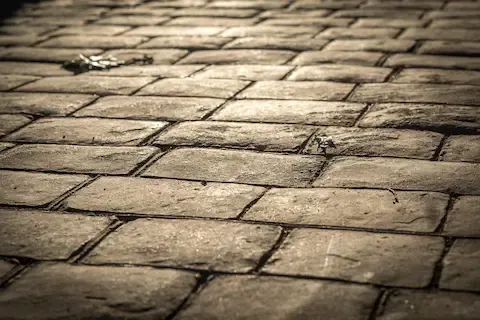
Stamped concrete gets its texture from rubber or polyurethane mats pressed into the surface while the concrete is still workable. The result mimics stone, slate, brick, or wood grain. But once that surface is sealed — which it must be to protect the color and the concrete itself — the smooth film of sealer can reduce the friction coefficient significantly. An unsealed, broom-finished slab might have a coefficient of friction well above 0.60, which is the general threshold considered safe for pedestrian traffic. A freshly sealed stamped surface, particularly one finished with a high-gloss acrylic sealer, can drop below that threshold when wet.
In Camas, where rain falls steadily for months at a time and algae or moss can begin to colonize a shaded patio surface within a single season, that risk compounds quickly. If your patio connects to a back door used by family members carrying groceries, the stakes are even higher. This is not a theoretical problem — it is one that homeowners and concrete contractors in the Pacific Northwest take seriously during the planning phase of every project.
How Pattern Depth Affects Traction
Not all stamped patterns are created equal when it comes to safety. Pattern depth — the distance between the raised edges and the recessed field of the stamp — plays a direct role in how well water channels away from the walking surface. Shallow patterns like slate or flagstone tile replicas may look elegant but offer fewer places for water to escape. Deeper patterns like cobblestone, ashlar cut stone, or rough-hewn wood plank designs create more pronounced ridges that break up sheet water flow and provide more surface texture underfoot.
When planning a patio in a climate like Camas receives, asking your contractor specifically about pattern depth is a reasonable and practical question. A pattern that works beautifully in a sunny Arizona courtyard may perform poorly on a shaded patio in Clark County during November. The orientation of the patio also matters — surfaces that slope slightly away from the house and toward a drainage edge dry faster and accumulate less standing water between uses.
Sealer Selection Is the Most Critical Safety Variable
If there is one factor that most directly determines whether a stamped concrete patio is safe in wet conditions, it is the sealer. High-gloss solvent-based acrylic sealers produce the richest color enhancement and the most dramatic wet-look finish, but they are also the most slippery when wet. Matte or satin sealers reduce the gloss but also reduce the slip risk. Water-based sealers tend to be less slippery than solvent-based formulas, though they also offer less color depth and may require more frequent reapplication.
For Stamped Concrete installations in the Pacific Northwest, many experienced contractors recommend a satin or low-sheen sealer as the baseline choice, particularly for ground-level patios and pool surrounds. The trade-off in visual intensity is modest, and the gain in pedestrian safety is real. This is a conversation worth having before the sealer is applied, not after someone slips.
Anti-Slip Additives and Broadcast Aggregate
The most reliable way to improve slip resistance without sacrificing sealer protection is to incorporate an anti-slip additive directly into the sealer before application. Aluminum oxide is the most common additive used by concrete contractors in Camas and the broader Clark County area. It is a fine, hard granule that suspends in the sealer and creates a textured surface film without significantly altering the appearance. The grit is nearly invisible from normal viewing distances but provides a meaningful increase in surface friction when the patio is wet.
Polymer grit additives are another option that can be mixed into the final sealer coat. These tend to be slightly softer than aluminum oxide and may wear faster in high-traffic areas, but they perform well and are widely available. Some contractors also broadcast a fine aggregate — sand or glass bead — directly onto the wet sealer as a final coat. This method provides the most texture but requires more skill to apply evenly and can affect the finished appearance more noticeably.
Any of these approaches can be discussed with your contractor before the project begins. The method chosen will depend on the pattern selected, the sheen level you prefer, and how much traffic the patio will see. Reading about Clark County stamped concrete projects can give you a clearer picture of how local installations typically handle these decisions in practice.
Maintenance That Preserves Traction Over Time
Even a well-sealed patio with an anti-slip additive requires maintenance to stay safe through multiple Pacific Northwest wet seasons. Sealers typically last two to five years depending on sun exposure, foot traffic, and how well the surface is cleaned between applications. As the sealer wears, traction actually improves in the short term — the sealer film thins and the underlying texture becomes more pronounced. But a sealer that is too thin no longer protects the concrete from moisture intrusion, staining, and freeze-thaw damage, which is a real concern in Camas when temperatures dip in January and February.
Algae and moss growth on shaded patios is another maintenance issue that affects both appearance and safety. A diluted sodium hypochlorite solution or a commercially formulated concrete cleaner applied annually before the wet season can prevent biological growth from creating a secondary slip hazard on top of the sealed surface. Pressure washing should be done carefully — excessive pressure can strip sealer and damage surface color.
What to Ask Before Your Patio Is Installed
If you are planning a stamped concrete patio in Camas, a few specific questions will help you make informed decisions about slip resistance from the start. Ask your contractor which sealer they plan to use and whether it includes an anti-slip additive as a standard practice or an upgrade. Ask about the depth of the stamp pattern being proposed and whether there are alternatives with better drainage characteristics. Ask how the patio will be graded to promote water runoff, and find out what maintenance schedule they recommend for resealing in the Pacific Northwest climate.
A contractor who can answer these questions clearly and specifically is one who has thought through the local conditions that affect performance. A patio in Camas is not the same as a patio in Phoenix, and the choices made at installation determine whether the surface stays beautiful and safe for years or becomes a liability the first time it rains.Traction also depends on keeping the surface clean and maintained. Read our spring patio prep checklist.
