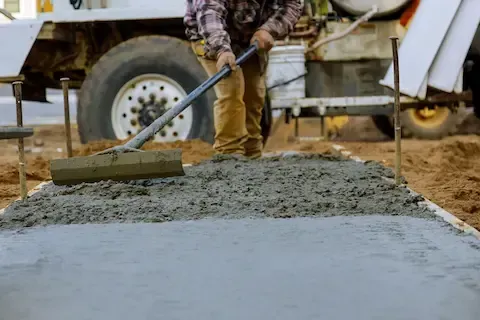
Why Concrete Spalling Happens in Camas and Clark County
Concrete spalling in Camas and Clark County happens when the surface layer of concrete flakes, chips, or peels away from the slab beneath it. The primary causes are freeze-thaw cycling during Pacific Northwest winters, moisture trapped beneath weak or over-finished surface layers, and de-icing salt damage to the concrete's paste matrix. Clark County's wet winters create ideal conditions for water to infiltrate concrete, expand when it freezes, and fracture the surface repeatedly over time. Identifying the cause early helps you choose the right repair approach before damage spreads deeper into the slab.
What Is Concrete Spalling and How Does It Look?
Spalling appears as shallow craters, flaking patches, or rough pitted areas on the surface of a concrete slab. Unlike a hairline crack that runs deep, spalling is typically surface-level damage—usually confined to the top quarter-inch to one inch of concrete. You might notice it first on a driveway, garage floor, or sidewalk where small chips seem to break loose after a cold spell. Left unaddressed, the exposed aggregate and rough texture trap more moisture, accelerating further deterioration. In Clark County, where concrete surfaces stay wet for months at a time, this cycle compounds quickly through a single season.
Why Does Freeze-Thaw Cycling Damage Concrete Surfaces in Clark County?
When water saturates concrete and then freezes, it expands by roughly nine percent in volume. That expansion pushes outward against the surrounding paste matrix. In Camas and the broader Clark County area, temperatures frequently oscillate around the freezing point between November and March—sometimes dropping below freezing at night and thawing by midday. Each freeze-thaw cycle applies internal hydraulic pressure to the concrete. Repeated enough times across a single winter, those pressure cycles fracture the weakest layer of the slab: the surface. Concrete that was placed with a high water-to-cement ratio or overtroweled during finishing is especially vulnerable because its surface paste is denser but more brittle than a properly finished slab.
Do De-Icing Salts Make Spalling Worse in the Pacific Northwest?
Yes—and this is one of the most common and preventable causes of concrete surface damage in Camas. Sodium chloride and calcium chloride salts used to melt ice on driveways and walkways do not directly dissolve concrete, but they significantly increase the number of freeze-thaw cycles a slab experiences. Salts lower the freezing point of water, which means melt-and-refreeze cycles happen at lower temperatures than they would naturally. More cycles per winter season means more cumulative pressure damage. Beyond that, chloride ions from salt can penetrate the concrete and accelerate corrosion of any steel reinforcement below the surface. If your Clark County driveway or sidewalk is treated with ice melt regularly, you are compressing years of wear into a few winters.
How Does a Weak Surface Layer Cause Spalling?
The top layer of a concrete slab is the most vulnerable part of the structure. During placement, if workers add water to the mix at the surface to make finishing easier, they dilute the cement paste ratio in that zone. The result is a surface layer that looks smooth but has lower strength and higher porosity than the concrete beneath it. Higher porosity means more water absorption, which means more freeze-thaw damage potential. Overtroweling—applying too much mechanical pressure during finishing—can also seal the surface unevenly, trapping bleed water beneath a dense skin. When that trapped moisture later freezes or evaporates, the skin separates and spalls. This is a workmanship issue that shows up months or years after the original pour, often making it difficult for property owners to connect the damage to the installation.
Are There Other Causes of Concrete Surface Damage in Camas?
Beyond freeze-thaw cycles and de-icing salts, several other factors contribute to spalling on Clark County properties:
- Alkali-silica reaction (ASR): A chemical reaction between alkaline cement and certain silica-bearing aggregates that causes internal expansion and surface cracking over time.
- Carbonation: Atmospheric carbon dioxide reacts with calcium hydroxide in concrete, gradually lowering the pH and reducing the paste's ability to protect embedded steel.
- Rebar corrosion: When steel reinforcing bars corrode beneath the surface, the rust expansion is forceful enough to fracture and lift the concrete above it—called corrosion-induced spalling.
- Poor curing: Concrete that dries too quickly after placement, particularly in low-humidity or windy conditions, does not develop full surface strength. In Camas, this is more common during summer pours than winter ones.
- Subgrade settlement: If the base beneath a slab shifts or washes out, stress concentrates unevenly across the surface and can initiate cracking that progresses to spalling.
Understanding which cause applies to your slab matters because the repair method differs. Surface sealing addresses moisture infiltration. Patching compounds address shallow flaking. Rebar-related damage may require partial or full slab replacement depending on depth and extent.
Can You Repair Spalled Concrete or Does It Need to Be Replaced?
Most spalling in the Pacific Northwest is repairable when caught before it penetrates more than an inch deep or covers more than roughly thirty percent of the surface area. Shallow repairs involve removing loose material, profiling the surface for bond strength, and applying a polymer-modified patching mortar or resurface overlay. The key is adhesion—a patch that does not bond to the original concrete will delaminate within one or two winters under the same freeze-thaw conditions that caused the original damage. For Concrete Repair that holds through Clark County winters, surface preparation is as important as the material used. For deeper spalling or where rebar corrosion is confirmed, a structural assessment determines whether selective replacement is more cost-effective than repeated patching.
If you want a broader picture of what the restoration process looks like from start to finish, the guide on concrete restoration in Camas WA covers surface prep, material selection, and what to expect during the repair process in more detail.
How Can You Prevent Spalling on New or Repaired Concrete?
Prevention starts before the concrete is poured. Specifying an air-entrained mix is the single most effective protection against freeze-thaw damage. Air entrainment introduces microscopic bubbles into the mix that give expanding water somewhere to go, relieving the internal pressure that causes spalling. For existing slabs, applying a penetrating silane or siloxane sealer reduces moisture absorption significantly. Avoid using sodium chloride ice melt products on any concrete surface less than one year old, and consider sand or kitty litter as traction alternatives during icy conditions. On older Camas driveways and walkways, resealing every two to three years is reasonable maintenance given the local climate.
