Freeze-Thaw Concrete Damage in the Columbia River Area
Freeze-thaw concrete damage happens when water enters small pores in concrete, freezes, expands by about 9 percent, and cracks the surrounding material. In the Columbia River area—spanning Camas, Washougal, and much of Clark County—winter temperatures regularly cycle between 28 and 38 degrees Fahrenheit. That narrow range is the most destructive zone for untreated concrete. Unlike regions with sustained deep freezes, the Pacific Northwest sees repeated freeze-thaw cycles in a single week, accelerating surface spalling, cracking, and structural compromise faster than many homeowners expect.
Why Does Freeze-Thaw Damage Happen So Frequently Near the Columbia River?
The Columbia River Gorge creates a microclimate that keeps Clark County temperatures hovering right at the freeze point throughout December, January, and February. Cold air funnels west through the Gorge, dropping overnight lows into the upper twenties, then afternoon sun pushes temperatures back above freezing. A single storm system can produce five or six complete freeze-thaw cycles before it clears. Concrete that was poured without air-entraining admixtures—or that was placed more than ten to fifteen years ago before modern mix standards—absorbs water readily and suffers repeated internal expansion stress during these cycles. Driveways, patios, steps, and exposed foundation walls around Camas and Washougal show the most visible effects because they sit fully exposed to precipitation and temperature swings.
What Are the Early Warning Signs of Freeze-Thaw Damage?
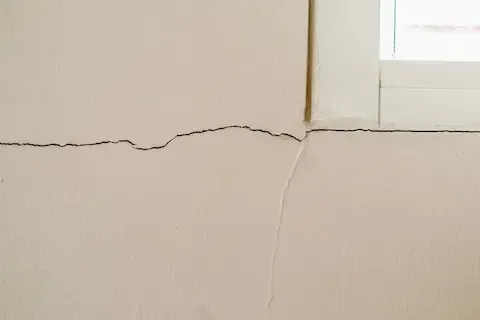
Surface scaling is the first indicator. You will notice thin flakes or chips separating from the top layer of a slab, often beginning near edges where water pools. Within one or two seasons, scaling can expose the aggregate beneath, giving concrete a rough, pitted texture. Hairline cracks appearing in grid-like patterns—called map cracking or crazing—indicate the paste matrix is failing throughout the surface, not just at a single weak point. On foundation walls, horizontal cracks near grade level deserve immediate attention because that zone sees the most repeated freeze-thaw stress from ground moisture. Efflorescence, a white mineral deposit left as water migrates through concrete and evaporates, confirms that water is penetrating deeply enough to dissolve internal compounds. If you are seeing any of these signs on your Clark County property after recent winters, an evaluation is worth scheduling before spring moisture accelerates the damage further.
How Does Freeze-Thaw Damage Differ from Other Concrete Problems?
Settlement cracking follows soil movement and typically produces diagonal cracks at corners or stepped cracking in block walls. Shrinkage cracking happens early in the concrete's life as it cures and usually produces fine, shallow lines that stabilize quickly. Freeze-thaw damage is distinctive because it is progressive and surface-initiated. It starts at the outermost layer and works inward, season by season. The damage also correlates directly with winter weather events, so homeowners in Camas often notice fresh scaling or new crack development every spring when snow and ice clear. Settlement or shrinkage cracking does not follow that seasonal pattern. Understanding which type of damage you have determines whether the correct repair is surface restoration, structural reinforcement, or foundation repair.
Can Freeze-Thaw Damage Be Repaired, or Does Concrete Need Replacement?
The answer depends on how deep the damage has penetrated. Surface scaling confined to the top quarter inch can often be addressed with a polymer-modified overlay or resurfacing compound that bonds to sound concrete beneath. Cracks wider than a quarter inch or cracks that have shifted vertically—indicating the slabs have moved relative to each other—require filling with a flexible polyurethane or epoxy material before any surface treatment. Foundation walls showing horizontal cracking near grade may require carbon fiber strap reinforcement or wall anchor systems depending on deflection measurements. Full replacement is appropriate when the concrete has lost structural integrity throughout the slab depth, when aggregate is exposed across most of the surface, or when repeated patching has failed to hold. A qualified contractor in the Camas area can probe the concrete with a simple hammer-tap test to identify delaminated zones where the surface has separated from the base layer but has not yet scaled away.
What Steps Protect Concrete from Future Freeze-Thaw Cycles?
Penetrating silane or siloxane sealers are the most effective protective treatment for existing concrete in the Pacific Northwest. Unlike film-forming sealers that sit on the surface, penetrating sealers chemically bond inside the pore structure and reduce water absorption by sixty to ninety percent. Application is straightforward but requires clean, dry concrete—ideally done in late summer or early fall before rain season begins. For new concrete pours in Clark County, specifying an air-entrained mix is essential. Air entrainment introduces microscopic bubbles into the paste that give expanding ice water somewhere to go, dramatically reducing internal pressure. A water-to-cement ratio below 0.45 also limits the pore space available for water to enter. Avoiding deicers containing ammonium nitrate or ammonium sulfate is equally important—these compounds chemically attack concrete in addition to the physical freeze-thaw stress. Sand is a safer alternative for traction on Camas driveways and walkways during icy conditions. You can also read more about foundation pours in Camas WA to understand how proper mix design from the start reduces long-term maintenance needs.
When Should You Call a Professional Rather Than Attempt DIY Repairs?
DIY patching products are widely available and appropriate for isolated small cracks in non-structural flatwork. However, several conditions indicate professional assessment is necessary. Any cracking in a foundation wall—horizontal, vertical, or stair-step—warrants a professional evaluation before repair because the wrong fix can mask ongoing structural movement. Slabs that have settled unevenly present a trip hazard and may require foam lifting or mudjacking rather than surface patching. If scaling covers more than about twenty-five percent of a slab surface, the economics of patching versus replacement deserve a professional opinion. In the Camas and Washougal area, freeze-thaw damage that has been accumulating for several winters often appears more extensive once a contractor removes loose material and probes for delamination. What looks like a surface problem frequently involves a larger repair scope than a homeowner can assess from visual inspection alone. Most of this damage becomes visible the moment the weather breaks. Read our spring concrete inspection walkthrough.
