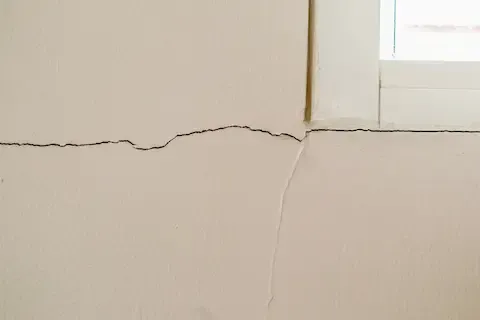
Foundation Cracks in Camas Homes: Normal vs Real Damage
Not every crack in a concrete foundation means you have a serious problem. But some cracks in Camas homes absolutely do. Knowing the difference between normal concrete behavior and genuine structural damage can save you from either unnecessary panic or a repair bill that grew larger than it needed to because the warning signs were ignored. This guide breaks down what you are likely to see in Clark County foundations, what it means, and when to take action.
Why Camas Foundations Crack in the First Place
Concrete is strong under compression but brittle under tension. As a slab or wall cures, it shrinks slightly, and that shrinkage creates internal stress. When the stress exceeds the tensile strength of the concrete at any point, a crack forms. This is not a defect. It is a predictable outcome of how concrete behaves as it hardens.
Beyond curing, Camas sits on soils that shift. Clark County is known for its clay-heavy ground, and clay expands when wet and contracts when dry. The seasonal rainfall patterns in the Columbia River Gorge region mean your foundation experiences repeated cycles of swelling and shrinking soil pressure. Over time, that movement leaves marks.
Crack Types That Are Typically Normal
Some cracks fall within the range of expected behavior and do not indicate structural compromise. These include:
- Hairline vertical cracks — These are narrow, straight, and run up and down. They commonly appear in poured concrete walls and slabs within the first few years after construction. A crack under one-eighth of an inch wide that has not changed in length or width over several months is generally a cosmetic issue.
- Shrinkage cracks at corners — Diagonal cracks at the corners of windows or door openings in basement walls often result from stress concentration during curing. If they are fine and stable, they rarely signal anything serious.
- Surface crazing — A network of very shallow surface cracks that look like a dried lakebed. This is a surface-only phenomenon caused by rapid drying during finishing. It does not affect structural depth.
The key question with any crack is whether it is stable or active. A stable crack that has not changed in six to twelve months is very different from a crack that is visibly widening or lengthening.
Crack Types That Signal Real Damage
Other crack patterns carry more serious implications, especially in a region like Clark County where soil movement and moisture are constant factors.
- Horizontal cracks in basement walls — This is the most concerning pattern. Horizontal cracking in a poured concrete or block wall indicates lateral soil pressure pushing inward. It suggests the wall is bowing or deflecting. Left unaddressed, this can progress to wall failure. In Camas neighborhoods with heavy clay soils and wet winters, horizontal cracks deserve immediate evaluation.
- Stair-step cracks in block or brick foundations — These follow the mortar joints in a diagonal pattern that resembles stair steps. They indicate differential settlement, meaning one section of the foundation is sinking at a different rate than another. This uneven movement puts the entire structure under strain.
- Wide vertical cracks — A vertical crack wider than one-quarter inch, especially one with displacement where one side is higher or lower than the other, is not a shrinkage crack. Displacement means the two sides have moved independently, which is a sign of settlement or soil failure beneath the footing.
- Cracks with moisture intrusion — Any crack that allows water into a basement or crawl space is a problem regardless of its size. Water following the same path repeatedly will widen the crack over time and introduce moisture damage to framing, insulation, and air quality inside the home.
Clark County Soil Conditions and Why They Matter Here
The geology around Camas and the broader Clark County area contributes directly to foundation behavior. The soils deposited by historic flood events in the Columbia River basin are variable in composition, and many residential lots in Camas sit on or near fill soils from past development grading. Fill soil that was not properly compacted will continue to consolidate under load for years, causing gradual settlement.
The wet season in the Pacific Northwest also creates conditions that accelerate foundation stress. Water that pools near the foundation perimeter increases hydrostatic pressure against walls. If your drainage is inadequate or your gutters are discharging close to the foundation, you are adding to the pressure the walls must resist. Many of the horizontal cracks seen in Camas basements have a drainage problem contributing to them alongside the soil issue.
If you are evaluating foundation repair options for your Camas home, understanding the soil and drainage context around your specific property is part of getting the right answer, not just patching a visible symptom.
How to Monitor a Crack You Are Not Sure About
If you find a crack and are uncertain whether it is active or stable, you can monitor it yourself before calling anyone. Mark both ends of the crack with a pencil and note the date. Write the width measurement at two or three points along the crack using a simple ruler or crack gauge card. Check it again in thirty days and then sixty days. If the marks have moved or the width has increased, the crack is active and needs professional attention.
For a crack near a structural load point, such as under a beam pocket or near a corner where walls intersect, do not wait. Those locations carry more consequence if movement is occurring.
When to Call a Professional in Camas
You should contact a professional if you observe any of the following in your Camas home:
- Horizontal cracks anywhere in a basement or crawl space wall
- Stair-step cracking in block or masonry
- Any crack with visible displacement between the two sides
- Active water intrusion through a crack
- Cracks that have grown measurably over sixty days
- Doors or windows that have suddenly become difficult to open or close, which can indicate frame racking from foundation movement
For a broader look at what foundation work involves in this region, read about our Clark County foundation services to understand the scope of what a proper evaluation and repair process looks like before you commit to any contractor.
Getting the Right Assessment
A good foundation assessment in Camas starts with the exterior as much as the interior. Slope of the grade around the house, condition of downspout extensions, presence of any previous repairs, and the soil type in your neighborhood all shape what is actually happening beneath your home. A crack in isolation tells part of the story. The full picture comes from understanding what forces created it.
If you are seeing warning signs and want a straight answer about what you are dealing with, prioritize getting an evaluation from someone familiar with Clark County soil conditions and local building practices. The cost of knowing is far lower than the cost of finding out too late.
