Concrete vs Pavers for Driveways in Camas Washington
Choosing between concrete and pavers for your driveway is one of the more consequential decisions you'll make as a homeowner in Camas. Both materials can deliver a clean, durable surface, but they perform differently under Pacific Northwest conditions, carry different long-term costs, and suit different property types. Understanding those differences helps you invest your money wisely instead of replacing a driveway sooner than you planned.
How Each Material Handles the Pacific Northwest Climate
Camas sits in a climate zone that delivers wet winters, occasional hard freezes, and temperature swings that stress outdoor surfaces more than homeowners often expect. The Columbia River Gorge effect means you can see ice where neighboring areas stay wet, and that freeze-thaw cycle is the single biggest variable in choosing a driveway material.
Concrete performs well when it's installed correctly with proper air entrainment and an appropriate mix design for freeze-thaw exposure. A well-poured concrete slab expands and contracts as a single unit, and when control joints are placed correctly, cracking stays manageable. Where concrete struggles is when water infiltrates an existing crack, freezes, and widens it. That's why surface sealing and prompt driveway repair matter so much in this region.
Pavers handle freeze-thaw movement differently. Because each unit is independent, the surface can shift slightly without cracking. That flexibility is genuine and worth considering. The trade-off is that shifting can cause unevenness over time, and the sand or gravel base beneath pavers must be well-compacted and properly graded from the start. In areas with significant clay soil—common in Clark County—base settlement is a real concern.
Upfront Cost and Long-Term Value
Concrete driveways typically cost less to install per square foot than paver driveways. In the Camas and Washougal area, paver installation often runs 20 to 40 percent more than a comparable concrete pour, depending on the paver style, border treatments, and site conditions. For a standard two-car driveway, that difference can be several thousand dollars.
Over a 20- to 30-year window, concrete generally holds its long-term cost advantage. Concrete driveways, when maintained, last 30 years or more. Paver driveways can last just as long, but ongoing maintenance—resetting settled sections, replenishing joint sand, and keeping the base stable—adds up.
Where pavers gain ground is in repair flexibility. If a section of a paver driveway settles or a unit cracks, individual pavers can be lifted and reset without disturbing the entire surface. Concrete repairs, while effective, are more visible because new concrete rarely matches aged concrete in color and texture.
Load-Bearing Performance
If you park heavy vehicles, have an RV, or regularly accept delivery trucks on your property, concrete holds a structural edge. A properly designed concrete slab—typically four inches thick for passenger vehicles, six inches for heavier loads—distributes weight across a continuous surface. Pavers distribute load through the individual units and the compacted base beneath them, which is effective for standard vehicles but more variable under concentrated heavy loads.
For most Camas residential driveways handling passenger cars and SUVs, this distinction is minor. If you're planning for heavier use, mention that to your contractor and ask specifically how the installation will be designed to handle it.
Appearance and Curb Appeal
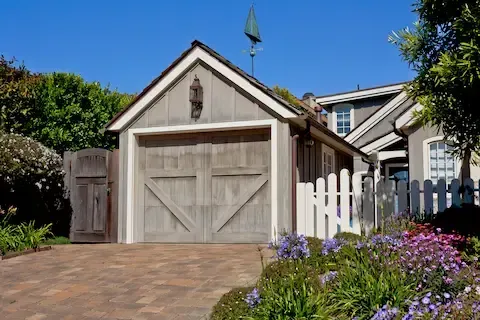
Pavers win on visual variety. They come in dozens of colors, shapes, and laying patterns, and a well-designed paver driveway adds a distinctive, high-end look that's hard to replicate with poured concrete. Homes in established Camas neighborhoods, particularly near downtown or in areas with traditional architectural styles, often benefit from the warmth and texture of a paver surface.
Concrete isn't visually limited to plain gray slabs. Exposed aggregate, broom finishes, brushed borders, and saw-cut patterns all create visual interest at lower cost than pavers. Stamped concrete is another option, though it deserves careful evaluation—stamped surfaces can become slippery when wet, which matters in a region that gets significant rainfall from October through April.
For a practical comparison of how concrete looks when done well locally, reading about driveway concrete in Camas WA gives you a sense of what's achievable in this specific area.
Maintenance Requirements
Both materials require maintenance, and neglecting either one shortens its lifespan significantly. Concrete benefits from sealing every three to five years to prevent water intrusion and protect against surface wear. You should also keep deicing salts off concrete driveways—salt accelerates surface scaling and is a common source of premature concrete deterioration in the Pacific Northwest.
Pavers need periodic inspection to identify and reset any units that have shifted. Joint sand should be replenished as needed, and the surface benefits from sealing to lock sand in place and protect paver color. Moss and algae growth in shaded areas is a maintenance reality for both materials in western Washington and southwestern Washington—keeping surfaces clean and well-drained reduces that problem substantially.
Which Material Is Right for Your Camas Property
There's no universal answer, but there are some clear patterns. Concrete tends to be the better choice when budget matters, when the driveway needs to handle heavy loads, or when you want a low-maintenance surface that performs predictably for decades. It's the dominant choice for new residential construction in Camas and the surrounding Clark County area for good reason.
Pavers make more sense when curb appeal is a primary priority, when the property's character calls for a traditional or premium aesthetic, or when you want the repair flexibility that individual units provide. They're also worth considering on driveways with unusual grades or curves where a poured slab would require more complex forming.
Either way, the quality of the installation matters more than the material itself. A well-installed concrete driveway outperforms a poorly installed paver driveway, and vice versa. In Camas, where soil conditions and drainage requirements vary block by block, working with a contractor who understands local conditions is as important as which material you choose.
