Block vs Poured Retaining Walls in Camas Washington
Choosing between block and poured concrete for a retaining wall in Camas, WA comes down to wall height, soil conditions, and budget. For walls under 4 feet in Clark County yards, segmental block is typically less expensive, easier to install, and handles drainage better without extra engineering. For taller walls, steeper slopes, or heavily saturated ground, poured concrete offers greater structural integrity and load capacity. Both materials are appropriate for Camas properties depending on site conditions. Understanding the key differences helps you make the right call before breaking ground.
What Is the Main Difference Between Block and Poured Retaining Walls?
Block retaining walls use individual segmental concrete units stacked in an interlocking pattern. Poured concrete walls are cast in place as a single monolithic structure. Block walls flex slightly with soil movement and drain more naturally through gaps between units. Poured walls are rigid, require formwork, and need planned drainage solutions like weep holes or French drains behind the wall. Block is faster to install for shorter projects; poured is more appropriate when structural loads or height demand a continuous, engineered mass of concrete.
Which Type Handles Water and Drainage Better in Clark County?
Clark County sees significant rainfall, and poor drainage is one of the top causes of retaining wall failure anywhere in the Pacific Northwest. Segmental block walls allow water to pass through naturally, reducing hydrostatic pressure that builds behind solid surfaces. Poured concrete walls trap water unless drainage aggregate and weep holes are explicitly engineered into the design. If your Camas yard has clay-heavy soil — common throughout the area — a block wall with gravel backfill often manages water pressure more reliably without added complexity. A retaining wall contractor familiar with local soil conditions can assess your specific drainage needs before recommending a material.
When Does Poured Concrete Make More Sense for a Retaining Wall?
Poured concrete becomes the preferred choice under specific site conditions:
- Wall height above 4 feet — Poured walls handle taller heights with greater structural rigidity.
- Heavy surcharge loads — If a driveway, structure, or vehicle sits near the top of the wall, poured concrete provides stronger resistance to lateral pressure.
- Steep or unstable slopes — Monolithic construction reduces the risk of differential movement over time.
- Code requirements — Some Clark County permit situations require engineered poured walls for walls above a certain height threshold.
The tradeoff is cost. Poured walls require forming, rebar placement, and concrete delivery, which adds labor and material expense compared to block for shorter applications.
When Is Segmental Block the Better Option in Camas?
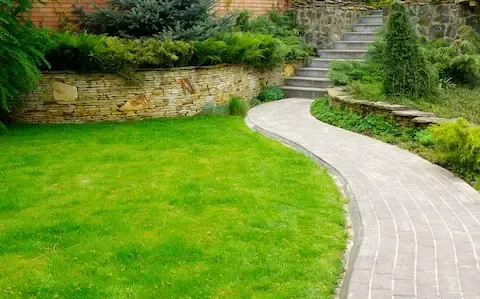
For the majority of residential retaining walls in Camas, segmental block is the practical choice. Most residential yard walls fall in the 2–4 foot range, which is squarely within block's structural capabilities. Block walls are also easier to step or curve to follow your yard's natural contours — something poured concrete handles less gracefully without more complex forming. Block units come in a range of finishes and colors, which matters if the wall is visible from the street or integrated into landscaping. For short walls in Clark County neighborhoods where aesthetics, cost, and drainage all factor in, block is frequently the right material.
Do Both Wall Types Require Permits in Clark County?
In Clark County, retaining walls over 4 feet in height typically require a permit and, in many cases, engineered drawings. This applies to both block and poured concrete construction. Walls under that threshold may not require a permit, but setback rules, property line proximity, and surcharge conditions can still trigger review. Before starting any retaining wall project in Camas, check current Clark County Development Services requirements. A contractor who regularly works in the area will know which projects need permits and can help you prepare the necessary documentation.
What Does Each Type Cost for a Typical Camas Property?
Costs vary based on wall height, length, site access, and drainage requirements. In general terms for the Camas area:
- Segmental block — Lower material and labor cost for short walls, typically more economical for standard residential projects under 4 feet.
- Poured concrete — Higher upfront cost due to forming and finishing labor, but appropriate when structural demands justify the investment.
Getting an accurate estimate requires a site visit. Soil conditions, access for equipment, and the volume of material needed all affect final pricing. To understand what options are available for your yard, read more about the retaining walls we build in Camas before reaching out for a quote.
Which Wall Type Lasts Longer?
Both block and poured concrete retaining walls are long-lasting when properly installed and drained. The most common cause of premature failure in either type is water. Walls that trap hydrostatic pressure behind them — regardless of material — will crack, lean, or collapse over time. Proper compacted gravel backfill, adequate drainage, and correct footing depth are more important to long-term performance than material choice alone. In Camas's wet climate, drainage design is not optional on any retaining wall project.
