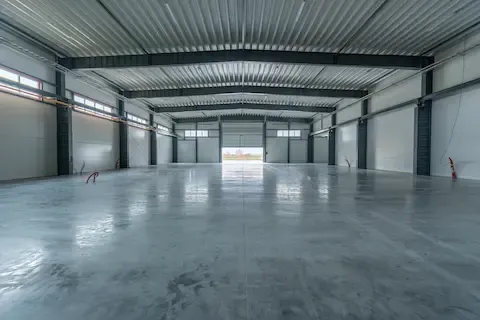
Industrial Concrete Solutions in Camas: Paper Mill District Expertise
Camas's industrial landscape has been shaped by heavy manufacturing for over a century, with the Georgia-Pacific paper mill serving as the economic anchor of the region. If you're managing an industrial facility, warehouse, or commercial property in Camas, you understand that standard residential concrete simply can't handle the demands of heavy equipment, chemical exposure, and constant traffic that define industrial operations.
Industrial concrete requires specialized engineering, material selection, and installation techniques that go far beyond typical commercial work. Whether you're upgrading aging infrastructure in the Paper Mill District or building new manufacturing space near the Port of Camas-Washougal, understanding these requirements ensures your concrete investment delivers decades of reliable performance.
What Makes Industrial Concrete Different
Industrial concrete must withstand forces and conditions that would destroy standard mixes within months. The fundamental difference lies in compressive strength, typically ranging from 4,000 to 6,000 PSI for industrial applications compared to 2,500-3,000 PSI for residential work. This increased strength comes from higher cement content, carefully controlled water-cement ratios, and specialized aggregate selection.
Beyond raw strength, industrial concrete incorporates chemical resistance to handle the acids, solvents, and alkaline materials common in manufacturing environments. The paper production process alone exposes concrete to sulfuric acid, sodium hydroxide, and various bleaching agents that would rapidly deteriorate unprotected surfaces.
Load distribution presents another critical factor. Industrial floors must support point loads from forklift outriggers, distributed loads from stacked materials, and dynamic loads from moving equipment. This requires precise slab thickness calculations, proper reinforcement placement, and carefully designed joint systems that prevent cracking while allowing necessary movement.
Paper Mill District Infrastructure Challenges
The Paper Mill District presents unique challenges that stem from both its industrial heritage and geographic location. Much of the existing concrete infrastructure dates to mid-20th century construction standards, when design specifications and material science differed significantly from modern practice. These older slabs often lack adequate vapor barriers, proper reinforcement depth, and sufficient thickness for current equipment loads.
Soil conditions in the lower Crown Point area, where much industrial development concentrates, include alluvial deposits and fill material that create settlement concerns. Proper subgrade preparation becomes essential, often requiring geotechnical analysis and engineered fill to achieve stable bearing capacity. Without this foundation work, even properly designed concrete will crack and settle prematurely.
The proximity to the Columbia River also introduces moisture management challenges. Groundwater levels fluctuate seasonally, and hydrostatic pressure can cause slab heaving or cracking if drainage systems aren't properly designed. Industrial facilities require robust underslab drainage, vapor barriers rated for continuous moisture exposure, and edge details that prevent water infiltration at critical joints.
Heavy Equipment Load Requirements
Industrial facilities in Camas typically house equipment that generates extreme localized stress on concrete floors. Paper processing machinery, for instance, can concentrate loads exceeding 50,000 pounds on relatively small footprints. Forklift operations add dynamic loads with impact forces that multiply the static weight of the equipment and cargo.
Proper load analysis requires understanding both the equipment specifications and the operational patterns. A forklift making hundreds of trips daily across the same path creates fatigue stress that differs from occasional heavy loads in a single location. Engineers must account for these patterns when designing reinforcement schedules and determining concrete thickness.
Most industrial floors in Camas require minimum 6-inch thickness, with 8-10 inches common for heavy manufacturing areas. Reinforcement typically includes welded wire fabric or rebar grids, with spacing and gauge determined by load calculations. Critical load areas may require post-tensioned systems or structural fibers to distribute stress and prevent cracking around anchor points.
Chemical Resistance and Surface Protection
Manufacturing processes expose concrete to chemical attack that progressively weakens the matrix if left unprotected. Acids lower the pH of concrete, dissolving cement paste and exposing aggregate. Alkaline materials can cause similar deterioration through different chemical pathways. Even seemingly mild substances like cutting fluids and hydraulic oils penetrate concrete and degrade internal structure over time.
Specification of chemical-resistant concrete begins with proper mix design. Denser concrete with lower permeability resists chemical penetration more effectively. This typically means water-cement ratios below 0.40 and inclusion of supplementary cementitious materials like fly ash or silica fume that fill pore spaces and reduce permeability.
Surface treatments provide additional protection tailored to specific chemical exposures. Epoxy coatings create impermeable barriers suitable for most industrial chemicals, while urethane systems offer better UV resistance for areas with natural light exposure. For extreme chemical environments, specialized toppings like polymer concrete or acid-resistant overlays may be necessary to ensure long-term durability.
Joint Design and Crack Control
Large industrial slabs require careful joint planning to control where cracks occur and ensure they don't compromise structural integrity or operational functionality. Control joints create intentional weak points where concrete can crack in predetermined locations, typically spaced 15-20 feet apart in industrial applications. These joints must be cut to proper depth, one-quarter of the slab thickness, within 6-12 hours of finishing to be effective.
Isolation joints separate the slab from columns, walls, and other structural elements, allowing independent movement without stress transfer. These joints require compressible filler material that accommodates expansion and contraction while preventing debris infiltration that could cause joint lockup and random cracking.
For facilities requiring joint-free floors, such as high-bay warehouses with narrow-aisle forklifts, post-tensioned systems provide an alternative. These systems use tensioned steel cables to compress the concrete, reducing crack potential and allowing much larger individual slab pours. However, they require specialized design and installation expertise along with higher initial costs offset by reduced maintenance needs.
Timing Industrial Pours in Camas Climate
Camas's wet climate creates scheduling challenges for industrial concrete work. Large commercial pours often exceed 100 cubic yards, requiring continuous placement over several hours. Weather windows must accommodate not just the pour itself but the critical finishing period that follows, typically requiring 4-6 hours of dry conditions for industrial floors with special finishes.
Temperature management also affects industrial concrete performance. Cold weather slows curing and may require heated enclosures or blanket insulation to maintain proper temperatures. Hot weather accelerates setting, potentially causing finishing difficulties and requiring special admixtures or scheduling adjustments to early morning hours when temperatures are coolest.
The optimal construction window for industrial concrete in Camas runs from June through September, though experienced contractors can successfully execute projects year-round with proper planning and protection. Winter work requires contingency planning for heating, weather protection, and potential delays that could affect overall project schedules and budgets.
Warehouse and Distribution Center Floors
The growth of e-commerce and regional distribution has increased demand for warehouse facilities capable of supporting modern material handling systems. These floors require exceptional flatness specifications, typically FF50/FL35 or better for very narrow aisle operations. Achieving these tolerances demands laser-guided screeding equipment and experienced finishing crews who understand the tight tolerances involved.
Warehouse floors also face unique abrasion from constant traffic and the turning action of forklift wheels. Surface hardening treatments help resist this wear, with dry-shake hardeners applied during finishing or penetrating chemical densifiers applied after curing. These treatments increase surface density and abrasion resistance while reducing dusting that can contaminate stored products.
For cold storage warehouses, additional considerations include thermal insulation beneath the slab and commercial concrete mixes designed to resist freeze-thaw cycling. Insulation prevents heat transfer to the ground that would waste energy and potentially cause frost heaving, while air-entrained concrete incorporates microscopic air bubbles that accommodate ice formation without cracking.
Repair and Restoration of Existing Industrial Slabs
Many Camas industrial facilities operate with concrete floors installed decades ago, now showing signs of deterioration that affect operations and safety. Assessing these floors requires understanding the original construction, current condition, and functional requirements before determining appropriate repair strategies.
Surface repairs address spalling, scaling, and minor cracking using polymer-modified repair mortars or epoxy systems. These materials bond to existing concrete and restore surface integrity, though they work best when underlying structural issues have been addressed. Proper surface preparation through grinding or shotblasting ensures adequate bond strength for lasting repairs.
Structural repairs tackle more serious problems like significant cracking, joint deterioration, or settlement. These interventions may include slab stabilization through mudjacking or polyurethane injection, carbon fiber reinforcement for crack control, or partial slab replacement in severely damaged areas. The most cost-effective approach depends on damage extent, facility downtime constraints, and long-term operational plans.
Working With Industrial Concrete Specialists
Industrial concrete projects require expertise that goes beyond standard commercial work. Qualified contractors should demonstrate experience with industrial applications, understanding of load calculations and structural requirements, and familiarity with the specialized materials and techniques these projects demand. They should also maintain relationships with structural engineers who can provide necessary design calculations and specifications.
When evaluating contractors for industrial work, ask for references from similar projects and verify their capacity to handle large pours with adequate equipment and crew size. Industrial projects often require weekend or overnight work to minimize operational disruption, so confirm the contractor can accommodate scheduling requirements that may fall outside normal business hours.
Proper documentation matters more in industrial applications than residential work. You need detailed specifications, mix designs, placement records, and testing results that verify the concrete meets design requirements. Professional contractors provide this documentation as standard practice and understand its importance for quality assurance and future maintenance planning.

