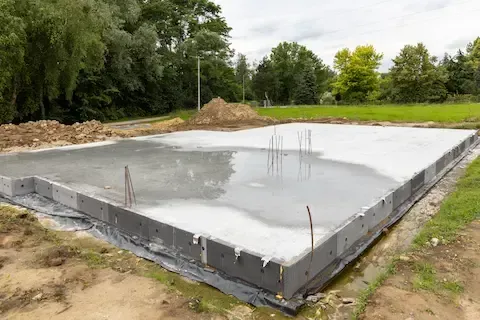
Camas Concrete poured during rainy weather in the PNW

Rain and Concrete: What Camas Homeowners Need to Know About Wet Weather

November 26, 20256 min read

Rain and Concrete: What Camas Homeowners Need to Know About Wet Weather

If you're planning a concrete project in Camas, Washington, you've probably wondered how the Pacific Northwest's frequent rain will affect your timeline. Whether you're installing a new driveway, patio, or foundation, understanding how rain impacts concrete work can save you thousands in repairs and ensure your project turns out right the first time.

Camas receives approximately 50 inches of rain annually, with the wettest months spanning October through March. This wet climate means concrete contractors and homeowners must carefully time projects and take protective measures to ensure proper curing and long-term durability.

Can You Pour Concrete When It's Raining?

No, you should not pour concrete when it's actively raining. Rain falling on fresh concrete dilutes the water-cement ratio in the surface layer, weakening the structure and causing issues like scaling, dusting, and reduced durability. Light misting immediately after finishing may be acceptable in some situations, but any significant rainfall during or within the first few hours after pouring can compromise the entire slab.

The critical window is the first 2-4 hours after pouring, when the concrete surface is still workable and hasn't begun its initial set. Rain during this period washes away cement particles and creates a weak, porous surface that will deteriorate prematurely.

How Rain Affects Fresh Concrete

When rainwater contacts newly poured concrete, several problems occur simultaneously. The excess water increases the water-cement ratio at the surface, creating a weak top layer that's prone to flaking and dusting. This phenomenon, called "laitance," leaves a milky residue on the surface that reduces bonding strength and creates finishing difficulties.

Heavy rain can also cause surface pitting, where raindrops create small craters in the concrete before it sets. These imperfections trap moisture and debris, leading to accelerated deterioration. In Camas's freeze-thaw climate, these defects become entry points for water that expands when frozen, causing spalling and cracking.

Additionally, rain can wash away the cream layer of cement paste that naturally rises to the surface during finishing. Without this protective layer, the aggregate becomes exposed, creating a rough, uneven surface that's difficult to seal or coat later.

Timing Your Concrete Project Around Camas Weather

Successful concrete work in Camas requires careful weather planning. The optimal window for concrete projects runs from late May through early October, when rainfall is minimal and temperatures remain consistently above 50°F. During these months, you'll have more flexibility with scheduling and fewer weather-related delays.

Check the extended forecast at least 10 days before your scheduled pour date. You need a minimum 24-hour window of dry weather after pouring, though 48-72 hours is ideal for full surface protection. Morning pours are generally safer than afternoon starts, giving you maximum daylight hours to complete finishing work before evening weather changes.

If rain threatens your project timeline, don't rush the pour to beat incoming weather. Postponing by a few days is always preferable to dealing with a compromised slab that requires expensive repairs or complete replacement.

Protective Measures for Wet Weather Concrete Work

When working during Camas's transitional seasons, contractors employ several strategies to protect fresh concrete. Plastic sheeting provides the primary defense, creating a waterproof barrier over the entire surface. The sheeting must be secured at all edges and supported above the concrete surface to prevent direct contact with the still-workable finish.

Temporary canopy structures offer more substantial protection for larger projects, allowing work to continue during light rain. These systems include sidewalls to prevent wind-driven rain from reaching the concrete and provide shelter for finishing crews.

Accelerating admixtures can reduce the critical vulnerable period by speeding up the initial set time. These chemical additives help concrete achieve its initial hardness faster, reducing the window when rain can cause serious damage. However, they require experienced handling and may not be appropriate for all applications.

The Science Behind Concrete Curing and Moisture

Understanding concrete curing helps explain why rain timing matters so critically. Concrete doesn't "dry" to harden—it cures through a chemical reaction called hydration, where cement particles react with water to form crystalline bonds. This process requires the right amount of moisture at the right time.

During the first 24-48 hours, concrete needs protection from too much water and too little. While the mix requires moisture for proper hydration, excess water from rain dilutes the cement concentration at the surface, preventing proper crystal formation. This creates a permanently weakened layer that cannot be repaired without removal.

After the initial set period, concrete actually benefits from moisture to complete the curing process. Professional contractors often apply curing compounds or keep concrete damp for 7 days to maximize strength development. However, this controlled moisture application differs dramatically from uncontrolled rainfall on fresh concrete.

Cost Implications of Rain-Damaged Concrete

Rain damage to fresh concrete creates expensive problems that may not appear immediately. Surface scaling typically becomes evident within the first winter, as freeze-thaw cycles exploit the weakened top layer. Repair options include grinding, resurfacing, or complete replacement, with costs ranging from $3-$8 per square foot for grinding to $6-$12 per square foot for replacement.

Structural issues from compromised concrete may take longer to manifest but carry higher stakes. Foundations or load-bearing slabs with rain-damaged surfaces may develop cracking, uneven settlement, or premature failure. These repairs often exceed $10,000 and may require extensive demolition and reconstruction.

Beyond direct repair costs, rain-damaged concrete reduces property value and creates liability concerns. Deteriorating driveways, walkways, or patios present tripping hazards and reflect poorly on overall property maintenance. For commercial properties, these issues can affect customer perception and potentially violate safety codes.

What to Do If Rain Hits Your Fresh Concrete

If unexpected rain threatens your concrete during or shortly after pouring, quick action can minimize damage. Immediately cover the entire surface with plastic sheeting, taking care not to disturb the finish. Weight down all edges with lumber or sandbags to prevent wind from displacing the cover.

Contact your contractor immediately to assess the situation. A professional can determine whether the concrete was compromised and what remedial steps might save the project. In some cases, additional finishing work can address minor surface issues once the weather clears.

For concrete that's been substantially affected by rain during the critical early hours, the honest assessment may require removal and replacement. While this creates delays and additional costs, it's far preferable to accepting a compromised slab that will fail prematurely and require replacement anyway.

Working With Professional Concrete Contractors in Camas

Experienced local contractors understand Camas's climate challenges and plan accordingly. They monitor weather closely, maintain flexible scheduling, and have protective equipment ready for deployment. Professional concrete companies also carry appropriate insurance to address weather-related issues and stand behind their work with warranties.

When selecting a contractor for your concrete project, ask specifically about their wet weather protocols. Qualified professionals should explain their rain contingency plans, describe protective measures they'll employ, and outline what happens if weather forces delays or complications.

The right contractor will never pressure you to proceed with a pour when conditions aren't ideal. They understand that long-term quality requires patience and proper timing, even if it means rescheduling during busy season.

Ready to schedule your concrete project with weather-smart planning? Contact Camas Concrete at https://camasconcrete.com or call (360) 727-0267 today for expert concrete services designed for Camas's wet climate.

Back to Blog